
2026 Guide to VA Benefits for Terminally Ill Veterans and Survivors: Hospice, Expedited Claims, DIC, and A & A
When a veteran is dealing with a terminal illness, the VA offers a wide range of supporting programs. While some of these services are associated with VA disability for service-connected conditions, others are available to qualifying veterans even if their terminal condition is not service-connected.
Here’s what you need to know about how the VA may be able to help you and your family during this difficult time.
Expedited VA Disability and Other Benefits Claims Processing
Securing VA disability benefits and other benefits through the VA can take time. At the end of 2025, the average processing time for an initial VA disability claim was 84.8 days, with longer turnaround times if the VA needs additional information or there are other problems.
However, the VA offers expedited processing to some veterans, including those who are terminally ill. Though the VA doesn’t promise a particular turnaround time for expedited claims, some veterans have reported receiving a decision in less than 30 days. As with a standard claim, the timeline may vary depending on how complete your claim is and whether there are any complicated issues involved. Working with an experienced VA disability benefits advocate from the beginning can help ensure that the process moves forward as efficiently as possible.
Call 1-888-373-4722 or complete a Free Case Evaluation form
Hospice and Palliative Care
A terminally ill veteran may receive hospice care services in what is expected to be the final six months of their lives. Any veteran who is eligible for VA healthcare services and enrolled may be eligible for hospice services, regardless of whether they are receiving VA disability. The terminal illness need not be service connected.
Hospice care may be provided in a residential care facility such as a nursing home, or in the veteran’s home. The services are focused on offering support, managing pain and generally offering as much peace and comfort as possible during the veteran’s final days.
Palliative care is similar to hospice care in that it aims to ease pain and provide comfort to the veteran. However, there are some important differences. The key difference is that while hospice care is only available at the tail-end of life and when attempts at a cure have ceased, palliative care may be combined with efforts to cure the illness.
Special Monthly Compensation, Aid & Attendance and Housebound Allowance
The VA offers a variety of potential add-ons for VA pension or VA disability, some of which may apply to a veteran during the final stages of a terminal illness. However, not every veteran who is terminally ill will qualify for all of these benefits, and some cannot be combined.
Special Monthly Compensation (SMC)
There is no SMC classification specifically for veterans who are terminally ill. However, the symptoms and limitations associated with the terminal illness may qualify some veterans for SMC. A veteran who qualifies for SMC will typically receive a special base rate of pay based on their classification, rather than the base rate associated with their VA disability rating.
Like regular VA disability, SMC benefits may be increased when the veteran has eligible dependents.
Aid & Attendance Benefits
A veteran may qualify for Aid & Attendance benefits if any one of the following is true:
- The veteran needs assistance from another person to perform daily activities such as eating, bathing and getting dressed
- The veteran is largely confined to bed due to the illness
- The veteran is being treated in a nursing home due to limitations created by the disability
- The veteran has vision of 5/200 or less in both eyes, even with corrective lenses
Housebound Benefits
A veteran whose service-connected disabilities prevent them from leaving the house may be eligible for housebound benefits. However, it is important to note that although a veteran may qualify for both Aid & Attendance and Housebound benefits, they cannot be received concurrently. The veteran will only be able to receive one benefit or the other.
Call 1-888-373-4722 or complete a Free Case Evaluation form
Planning for the Veteran and Dependents
The VA offers advance care planning services to help ensure the veteran’s wishes are carried out in their final days and beyond. These services include preparation of an advance healthcare directive that provides instruction to the veteran’s doctors and other providers and appoints someone to make decisions for them if they are unable to do so themselves.
Benefits for Survivors
Benefits for surviving dependents of a disabled veteran will vary depending on qualifications for both the veteran and the dependent. One of the most significant possible benefits is Dependency and Indemnity Compensation, DIC.
| Benefit Type | Who It’s For | What It Provides | Processing Priority |
|---|---|---|---|
| Expedited VA Disability Claims | Terminally ill veterans | Faster decisions on disability compensation | High priority |
| VA Hospice & Palliative Care | Terminally ill veterans | Comfort-focused care, pain management, end-of-life support | Immediate |
| Aid and Attendance (A&A) | Veterans & surviving spouses | Extra monthly financial support for care needs | Priority |
| Dependency and Indemnity Compensation (DIC) | Surviving spouses & dependents | Ongoing monthly survivor benefits | Priority |
| VA Health Care | Terminally ill veterans | Medical care with reduced or no copays | High priority |
| Survivor Pension Benefits | Eligible surviving family members | Needs-based monthly income support | Standard–Priority |
Call 1-888-373-4722 or complete a Free Case Evaluation form
Who Qualifies for DIC Benefits?
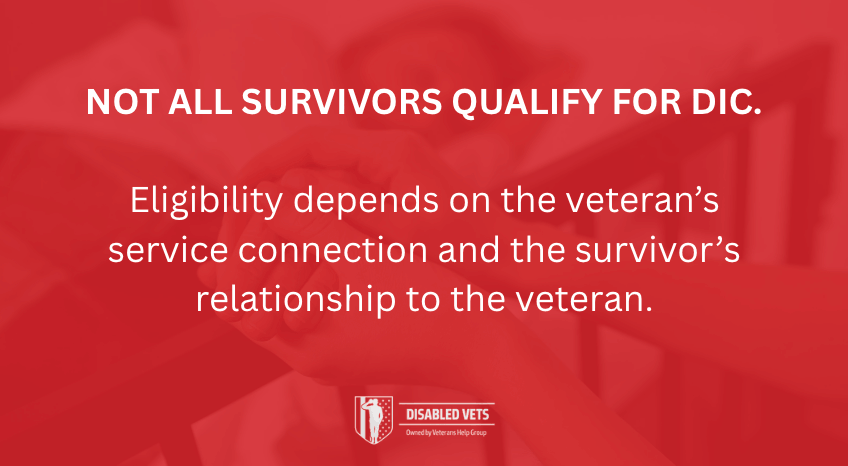
DIC benefits provide monthly compensation for certain dependents of a qualifying veteran. However, not every disabled veteran qualifies for DIC benefits for their family. To be eligible, the service member or veteran must have either:
- Died in the line of duty, or
- Died of a service-connected condition, or
- Had a rating of totally and permanently disabled for at least 10 years leading up to their death (less for those with more recent military separations or who were POWs)
The base monthly benefit for a surviving spouse under the DIC program is $1,699.36. That amount may be increased for many different reasons, including:
- An added amount for each minor child
- A transitional allowance for the first two years if there is at least one minor child in the house
- An added amount if the veteran had a total disability rating for at least 8 years and the spouse was married to them throughout those 8 years
- The spouse is disabled and qualifies for Aid & Attendance or a Housebound allowance
There is also a small monthly benefit available for unmarried adult children aged 18-23 who are in school, and those who became disabled before age 18.
Every Veteran’s Story is Different
While this overview addresses the most common and most significant types of benefits available to terminally ill veterans and their families in 2026, the best way to ensure that you don’t miss out on benefits is to work with an experienced VA disability benefits advocate. Depending on your circumstances, dependents may qualify for other benefits, such as survivors’ pension benefits, educational benefits, and healthcare.
Our accredited veterans benefits advocates have in-depth knowledge of the range of benefits veterans and their dependents may receive, and the qualifications for those benefits. To learn more about how we can help make sure you aren’t missing out on benefits you earned with your service, call us today at 888-373-4722 or fill out our contact form HERE.
FAQs:
Navigating VA benefits during a terminal illness can feel overwhelming, especially when time is limited and families are under stress. Many veterans and survivors are unaware that the VA offers expedited claims processing, hospice care, and survivor benefits designed specifically for these situations. The following FAQs address some of the most common questions about VA benefits available in 2026 for terminally ill veterans and their loved ones.
1. What VA benefits are available for terminally ill veterans in 2026?
Terminally ill veterans may qualify for several VA benefits in 2026, including expedited disability claims processing, VA hospice and palliative care services, and increased monthly compensation. The VA gives priority to claims involving terminal illness to help veterans and their families access support as quickly as possible.
2. Can VA disability claims be expedited for terminally ill veterans?
Yes. The VA allows terminally ill veterans to request expedited processing of disability and pension claims. When proper medical documentation is submitted, these claims are typically moved to the front of the line, helping veterans receive benefits sooner during critical times.
3. What benefits are available to survivors of terminally ill veterans?
Survivors may be eligible for Dependency and Indemnity Compensation (DIC), Aid and Attendance benefits, and other VA survivor programs if the veteran’s death is connected to service or qualifying conditions. These benefits can provide ongoing financial support and help cover care-related expenses after a veteran passes away.
Read More Here:
- Types Of VA Disabilities
- VA Disability Compensation Rates
- What Is TDIU and How Can I Get It?
- Can My Spouse Receive My VA Disability After I Die?
- The Easiest Way to a 100% VA Disability Rating
- VA Benefits For Spouses of 100% Disabled Veterans
- SSDI For Veterans
Call 1-888-373-4722 or complete a Free Case Evaluation form