
The U.S. Department of Veterans Affairs (VA) considers hyperhidrosis a qualifying disability for veterans benefits. Unfortunately, this does not make obtaining hyperhidrosis veterans benefits easy.
If you received a denial of disability benefits for hyperhidrosis, do not lose hope. You are not alone. A veterans disability advocate can help you appeal the denial and fight for the benefits you need.
VA Compensation Claims for Hyperhidrosis—Everything You Need to Know
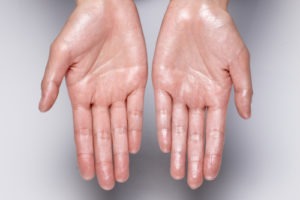
Hyperhidrosis is a condition in which the body overproduces sweat. Most people sweat when they get too hot or are engaged in exercise, which raises their body temperature. Sweating is a cool-off mechanism. However, with hyperhidrosis, the excessive sweating is not necessarily related to heat or physical activity. Instead, it results from overactive nerves signaling the sweat glands without the usual trigger (exercise or heat).
This type of hyperhidrosis that occurs all on its own is called primary focal hyperhidrosis. Doctors don’t know what causes the nerves to become overactive, but it could be related to heredity and worsens with nervousness and stress. It typically affects the palms of the hands, soles of the feet, underarms, and face.
Hyperhidrosis can be so severe that it disrupts your normal daily activities. Additionally, it can lead to social anxiety, embarrassment, and emotional distress. All of these issues should be discussed in detail with your doctor or mental health practitioner, who can document them for your disability application.
When applying for VA benefits for hyperhidrosis, veterans typically file VA Form 21-526EZ, which is the standard application for disability compensation. Including accurate medical documentation and service records from the start can make your claim stronger.
Providing Strong Evidence of Your Hyperhidrosis to the VA
If you are seeking VA disability for hyperhidrosis, it’s imperative that you clearly and strongly show a nexus between your in-service event and the condition. As the exact cause of primary focal hyperhidrosis is unknown, showing a correlation between the event and the onset of the condition, specifically as it relates to time, will be key.
Presenting supporting research will also make a big difference. For example, aim to provide the VA with a doctor’s well-informed opinion of the condition’s likely cause and how it affects your daily life. This information will go a long way in convincing the agency that you deserve to receive benefits.
You can also include medical literature or research linking stress, nerve injury, or exposure to environmental factors during service to the development of hyperhidrosis. This type of secondary evidence can strengthen your claim when the direct cause is not well understood.
Getting Hyperhidrosis Veterans Benefits
The criteria for obtaining disability benefits are strict, and there are three things your appeal must establish to be successful:
You must have a current diagnosis of hyperhidrosis, which is typically as simple as providing documentation or a medical statement from your doctor. The evidence must also demonstrate that an event during your service caused your hyperhidrosis or that your condition started while you were serving. Finally, you must have a medical nexus between your in-service event or onset and your hyperhidrosis diagnosis.
Veterans can also file a VA secondary service connection claim for hyperhidrosis if their sweating is caused or worsened by another service-connected condition or its treatment. This is one of the most effective ways to establish benefits when direct service connection is difficult to prove.
Secondary hyperhidrosis occurs when the condition is the result of another medical condition. Though medically less common, you may have an easier time showing that your hyperhidrosis resulted from a different service-connected disability.
In fact, hyperhidrosis is a secondary condition of many different types of service-connected disabilities. For example, hyperhidrosis can stem from anxiety, diabetes, nervous system disorders, infections, heart attack, certain cancers, and more. Depending on your situation, you may have developed one of these disorders or diseases due to your military service.
In addition, certain medications can lead to hyperhidrosis. If you are taking something to treat a service-connected condition that is causing excessive sweating, that would be considered a secondary service-connected disability.
A VA Disability Advocate Can Help You Prove Your Secondary Service-Connected Disability
If you cannot establish a direct service connection for your hyperhidrosis, a secondary service connection may be an option. An example would be if you developed diabetes after suffering exposure to Agent Orange, and your diabetes causes excessive sweating. In that case, an advocate can help you establish a secondary service connection for your hyperhidrosis in your appeal.
If you believe your primary condition is service-connected but have not established a service connection with your secondary condition, an advocate can help.
Working with a veterans disability advocate can significantly increase your chances of approval by ensuring your medical evidence, statements, and documentation meet the VA’s requirements.
Your Hyperhidrosis May Qualify You for 100% Disability Benefits
If your service-connected hyperhidrosis prevents you from being able to work at all, you may be able to receive the “Individual Unemployability” (IU) designation. Per VA, this designation would allow you to automatically receive disability benefits the same as someone with a total disability (or 100% disability rating) without actually having a 100% disability rating. This is a plausible scenario because of the way hyperhidrosis is known to disrupt a person’s normal functionality.
The criteria you will have to meet for individual unemployability include:
- You are not able to maintain a job due to the condition.
- You have a single disability rating of at least 60% OR you have multiple disability ratings with a combined rating of 70%. In the second scenario, at least one of the ratings has to be 40% or higher.
It is possible to qualify for Individual Unemployability with a lower disability rating in certain cases. The VA decides this on a case-by-case basis. Veterans can apply for Total Disability based on Individual Unemployability (TDIU) by submitting VA Form 21-8940. This form helps establish how hyperhidrosis limits employment opportunities.
How a Veterans Disability Advocate Can Help With Your Hyperhidrosis Case
A veterans disability advocate can determine why your claim was denied and explain it clearly, identify the best route for your appeal under the VA’s decision review process, and help gather evidence to prove your condition is service-connected.
If you have filed a claim for hyperhidrosis and received a grant but believe your disability rating is lower than you deserve, a veterans disability advocate can also fight to increase it. Alternatively, if you filed for an increased rating and your claim was continued at the same percentage, an advocate can help you appeal by collecting updated medical evidence and statements that show how the condition has worsened.
Appealing a denied VA hyperhidrosis claim can take time, but with professional help, veterans can strengthen their cases and pursue all available compensation options.
Call Today to Get Help from a Veterans Disability Advocate
You served your country admirably. If you develop a disability because of it, you deserve compensation for that disability. Call today for veterans disability help. The initial consultation is free.
For help with your VA hyperhidrosis claim or appeal, contact a trusted veterans disability advocate today. Free consultations are available nationwide, CLICK HERE or call us today at 1-888-373-4722
Frequently Asked Questions About VA Disability for Hyperhidrosis
What is the VA disability rating for hyperhidrosis?
The VA rates hyperhidrosis under Diagnostic Code 7832. Ratings range from 0 to 30% based on how severely the condition limits your ability to function or respond to treatment.
Can I claim hyperhidrosis as a secondary condition?
Yes. Hyperhidrosis can develop due to anxiety, diabetes, medications, or nerve disorders—all of which may be service-connected. Veterans can file a secondary claim linking the two.
What kind of evidence does the VA need for a hyperhidrosis claim?
The VA typically requires medical records showing a diagnosis, details about when symptoms began, and proof connecting the condition to your military service or to a service-connected disability.
Learn More
- Types Of VA Disabilities
- VA Disability Compensation Rates
- What Is TDIU and How Can I Get It?
- SSDI For Veterans
- Can My Spouse Receive My VA Disability After I Die?
- The Easiest Way to a 100% VA Disability Rating
- VA Benefits For Spouses of 100% Disabled Veterans